
Kegger Chronicle · The Experience
Rattlesnake Warning
They live here too — and they were here first
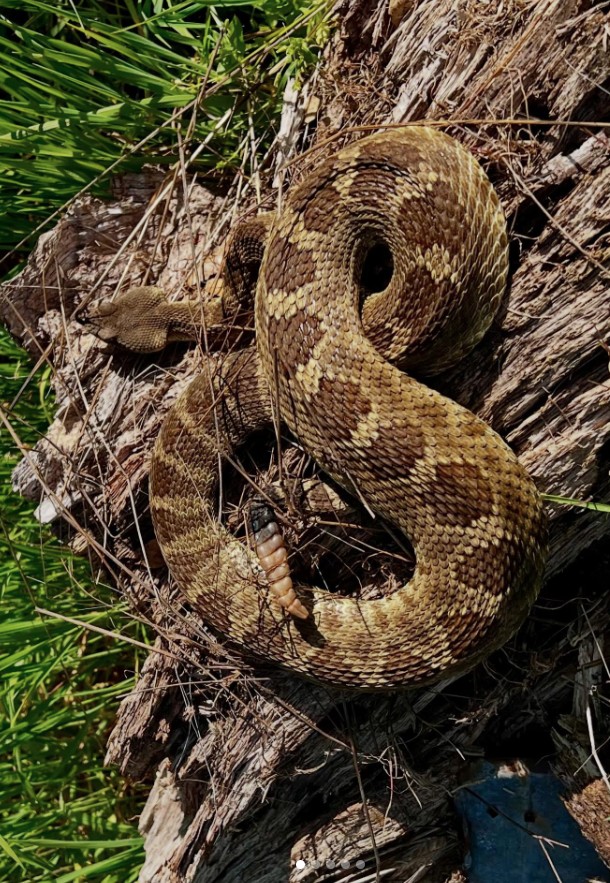
The Stanislaus National Forest is home to the Western rattlesnake (Crotalus oreganus), the only venomous snake in this part of the Sierras. They are common. They are well-camouflaged. And they are not remotely interested in biting you — but they will if they feel threatened, cornered, or stepped on.
Over 50 years of Kegger Backpacks, rattlesnakes have been seen in camp, on the trail, on the rocks, and near the river. Nobody has been bitten. This is partly luck and partly because the group has always taken them seriously.
⚠ What to do — and not do
- Never reach under rocks, logs, or brush without looking first. Rattlesnakes rest in shade.
- Watch where you step in camp, especially at night. Use a headlamp after dark.
- Do not approach or handle a snake. Even a "dead" rattlesnake can bite via reflex for up to an hour. Leave it alone.
- Give it space. Rattlesnakes can strike roughly half their body length. Step back and give a wide berth.
- If bitten: Stay calm, keep the bite below heart level, remove any rings or tight clothing near the bite, get to a hospital fast. Do NOT cut and suck, do NOT apply a tourniquet, do NOT apply ice.
- The nearest hospital: Sonora Regional Medical Center, Sonora, CA. Know the route before you go in.
Identification
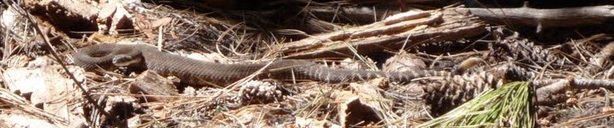
How to identify a Western rattlesnake
- Heavy-bodied for its length — stocky, not slender
- Triangular, arrow-shaped head distinctly wider than the neck
- Diamond or chevron pattern of brown, tan, and grey scales
- Rattle on tail — young snakes may only have one or two segments
About the Western rattlesnake
The Western rattlesnake is most active from April through October, with peak activity in June through August — exactly when the Kegger happens. They prey on small mammals and lizards. They do not hunt humans. A rattlesnake on the trail is almost always trying to get away from you.
If you hear a rattle, freeze, locate the snake, and back away slowly. It will move on once it no longer feels threatened.
In 50 years at this campsite
Rattlesnakes have been seen regularly at the Kegger camp — on the trail, on the rocks near the river, and occasionally in or near the campsite. The group has always responded correctly: give it space, watch where it goes, inform others, and go about the day with appropriate awareness.
Nobody has been bitten. Let's keep it that way.