
Kegger Chronicle · Gear & Tradition
The Kegs
From six-packs and tequila to half-barrels of craft beer — a history of what we carry in
The first beer at the first Kegger was in six-packs and bottles of tequila. Then things got more sophisticated. Over 50 years, both the equipment and the beer have evolved considerably. Kegs are usually procured in the Sacramento area in the days before the Kegger to assure supply.
Procurement and transport
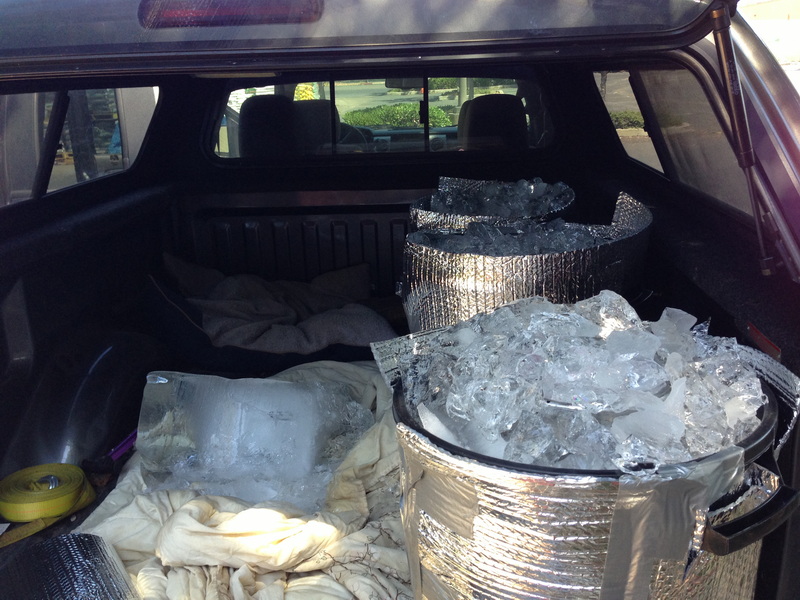
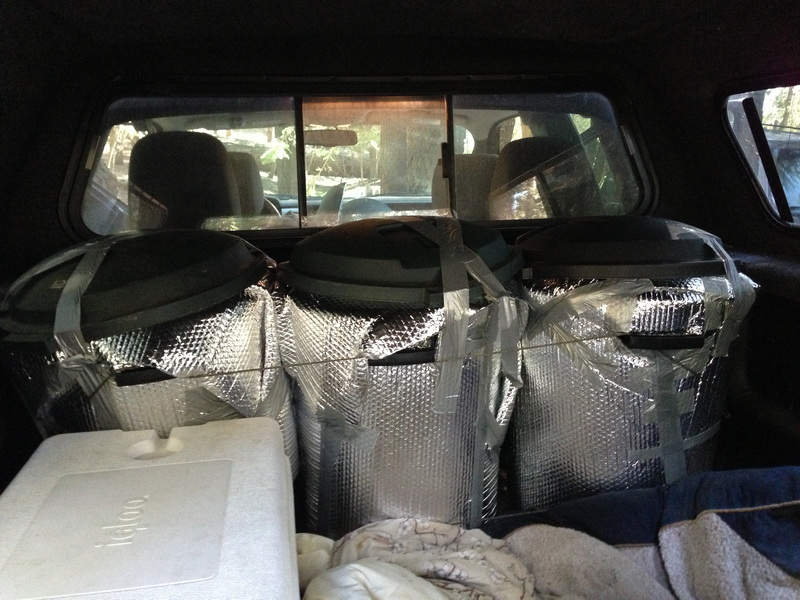
Getting a keg to the trailhead is itself a logistics operation. The system that has evolved: pack the keg in the truck bed with large blocks of ice and wrap the whole assembly in foil bubble insulation, secured with cargo straps. Block ice lasts longer than bag ice for this purpose.
At camp
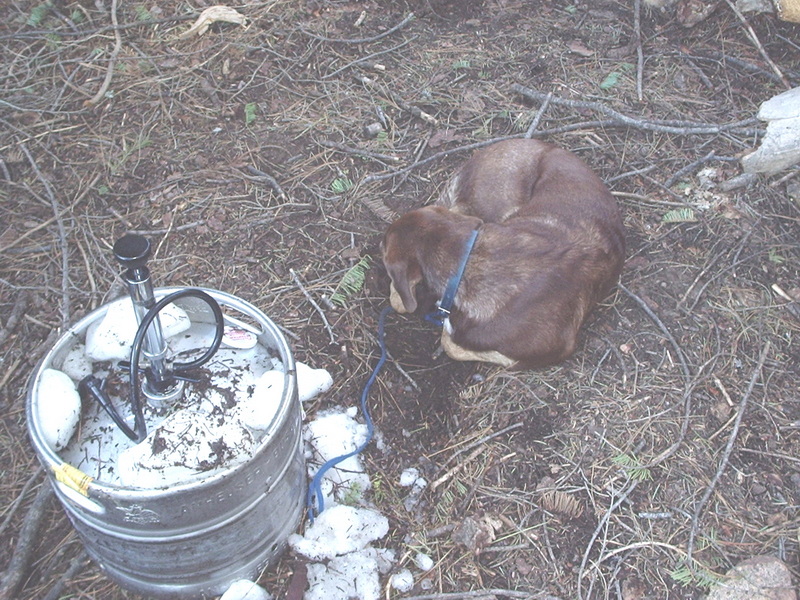
Once the keg arrives at camp, it gets set up in a central location — ideally in shade, packed with any remaining ice, and elevated slightly on rocks to make pumping easier. The pump goes in, the first pour happens, and the Kegger officially begins.
The beer selection over 50 years
The first years: whatever was cheapest and came in quantity. By the 1990s, Tom was sourcing microbrews. The 50th Kegger in 2025 featured craft kegs — a long way from the Tequila Break-Out days.
Snow years: natural refrigeration
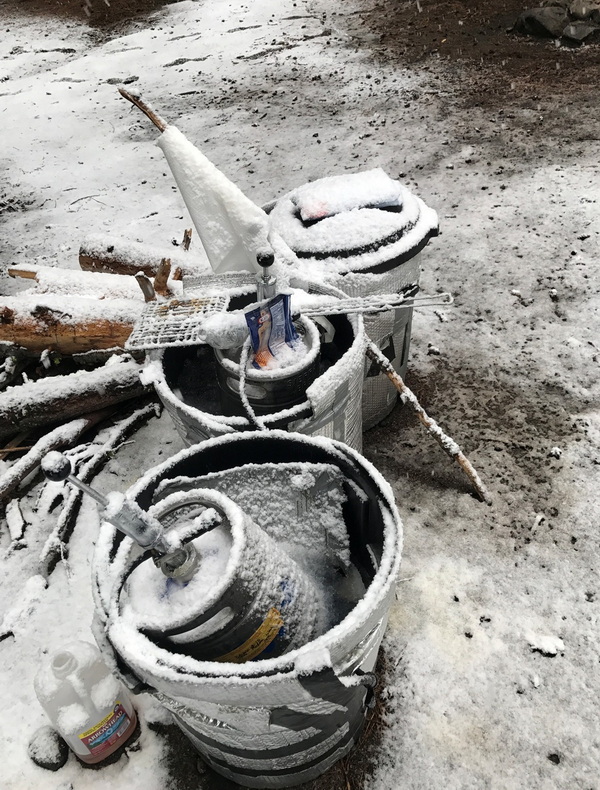
In a heavy snow year, the ice logistics become irrelevant. The kegs sit in snow. The beer stays perfectly cold. The challenge shifts to keeping the pump valves from freezing.
See also: Stretchers & Kegs for the full history of how the kegs get to camp.